
Key takeaways
- An ETP is mandatory for most industries that discharge process wastewater — your Consent to Establish (CTE) and Consent to Operate (CTO) set the limits it must meet.
- Every ETP is a train of stages: preliminary → primary (physico-chemical) → secondary (biological) → tertiary polishing → sludge handling. Skipping characterisation is the most common design mistake.
- Conventional activated sludge, MBBR, MBR and modular skid-mounted plants each suit a different mix of load, footprint, reuse target and timeline.
- Where discharge is restricted or reuse is the goal, add UF/RO and evaporation (MEE/ATFD) to reach Zero Liquid Discharge.
- Plan for operating cost — power, chemicals and sludge disposal — not just the capital cost of the plant.
If your factory generates process wastewater — from dyeing, formulation, reaction vessels, washing, cooling-tower blow-down or boilers — you almost certainly need an effluent treatment plant (ETP). An ETP is the engineered system that takes contaminated industrial wastewater and treats it until it meets the discharge or reuse standards set by your State Pollution Control Board (SPCB), such as GPCB in Gujarat, and the Central Pollution Control Board (CPCB).
This guide explains, in plain engineering terms, how an ETP works, which type suits which industry, what actually drives the cost, and how to keep the plant compliant year after year. It is written for plant heads, EHS managers and project teams who are planning a new ETP, upgrading an old one, or comparing quotations.
What is an Effluent Treatment Plant (ETP)?
An effluent treatment plant removes suspended solids, oil and grease, dissolved organics (measured as BOD and COD), colour, nutrients, heavy metals and other pollutants from industrial wastewater. The treated water is then discharged within the limits in your consent, or recycled back into the process for reuse.
Under the Water (Prevention and Control of Pollution) Act, 1974 and the Environment (Protection) Act, 1986, industries need consent from the SPCB — Consent to Establish (CTE) before construction and Consent to Operate (CTO) before commissioning. The effluent quality, quantity and treatment arrangement are written into those consents, so the ETP is not optional equipment: it is a legal condition of running the plant.
| ETP | STP | CETP | |
|---|---|---|---|
| Treats | Industrial process wastewater | Domestic sewage | Effluent from many small industries together |
| Typical owner | A single factory | Township, hotel, hospital, campus | An industrial estate or association |
| Design driven by | Effluent characterisation (COD, TDS, metals, colour) | Population / flow, BOD | Combined load and inlet norms of members |
| Related products | Effluent Treatment Plant | Sewage Treatment Plant | Custom-engineered to the estate |
How an ETP works: the five treatment stages
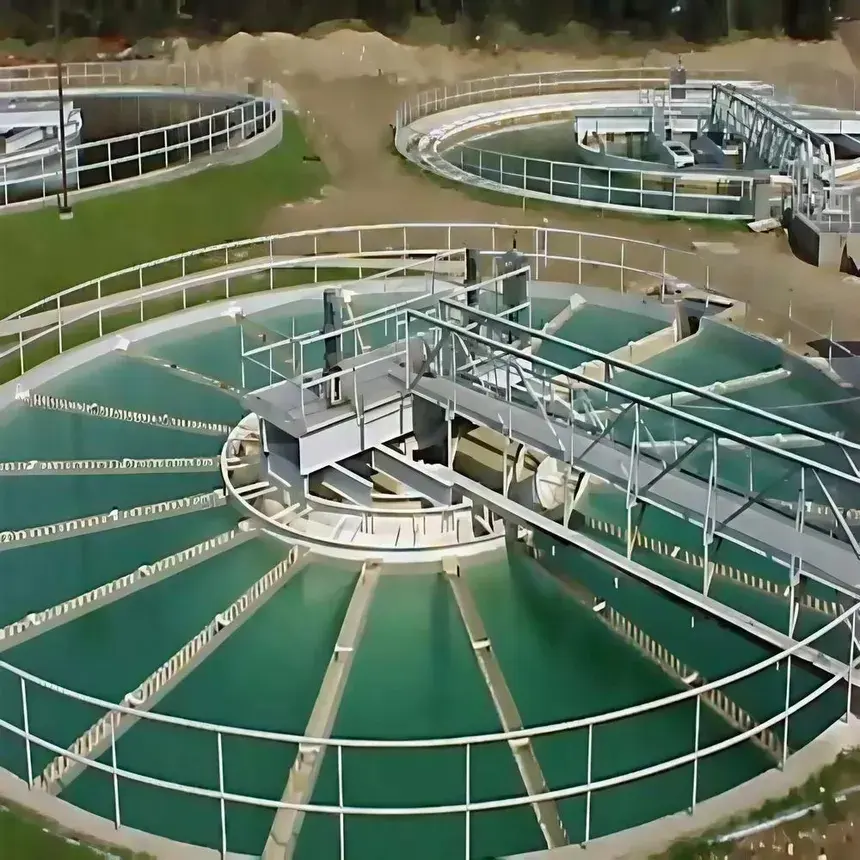
The exact unit sequence depends on the effluent, but almost every industrial ETP is built from the same five stages. Understanding them makes it much easier to read a proposal and spot what is missing.
1. Preliminary treatment
Bar screens and grit removal take out rags, plastics and coarse solids that would damage pumps. Oil and grease traps or skimmers remove free oil. Most importantly, an equalisation tank blends the batch and shift-wise variations in flow and strength so the downstream units see a steady feed. Undersizing this tank is one of the most common reasons an ETP performs erratically.
2. Primary (physico-chemical) treatment
Here the pH is corrected and chemicals — coagulants such as alum or ferric chloride, and polymer for flocculation — bind fine suspended and colloidal matter into flocs that settle in a primary clarifier or are floated out in a DAF (dissolved air flotation) unit. This stage removes a large share of suspended solids, colour and part of the COD, and is where heavy-metal precipitation is done for electroplating and metal-finishing effluent.
3. Secondary (biological) treatment
Microorganisms consume the dissolved organic matter. Depending on strength and space, this can be a conventional activated sludge process (ASP), a moving-bed biofilm reactor (MBBR), a membrane bioreactor (MBR), a sequencing batch reactor (SBR), or — for very high-strength effluent — an anaerobic stage such as UASB ahead of an aerobic polish. This is the core of the plant and the largest lever on BOD and COD removal.
4. Tertiary (polishing) treatment
Pressure sand filters and activated carbon filters remove residual solids and organics. Where colour, refractory COD or reuse quality is a concern, advanced steps such as ozonation, Fenton oxidation, ultrafiltration and reverse osmosis are added. Disinfection (chlorination or UV) is provided when the treated water is reused for utilities or gardening.
5. Sludge management
Every ETP produces sludge. It is thickened, dewatered on a filter press or centrifuge, and disposed of as directed by your authorisation — and ETP sludge from many chemical and pharmaceutical processes is classified as hazardous waste, so it must go to an authorised TSDF or recycler. Sludge handling is a real operating cost and should be in the plan from day one.
Choosing the right ETP technology
There is no single best technology. The right choice depends on the strength and variability of your effluent, available land, the discharge or reuse target, the timeline, and the skill level of the operating team.
| Option | Best suited for | Strengths | Watch-outs |
|---|---|---|---|
| Conventional activated sludge | Moderate-strength, steady effluent with adequate land | Well-understood, robust, low chemical use | Large footprint; sensitive to shock loads and sludge settling |
| MBBR | Variable or shock loads; retrofits where space is tight | Compact, stable under load swings, lower sludge than ASP | Needs good pre-treatment; carriers and aeration to be maintained |
| MBR | Reuse-grade water, very limited space, stringent limits | Excellent effluent quality, very small footprint | Higher capital and energy; membrane cleaning and replacement |
| Modular / prefabricated ETP | SMEs, fast start-up, small to medium flows | Factory-built, quick to install, minimal civil work | Sized to a defined effluent profile; confirm expansion path |
Discharge standards: what your ETP must meet
General standards for discharge of environmental pollutants are laid down in Schedule VI of the Environment (Protection) Rules, 1986. For discharge into inland surface water, the commonly cited general limits are:
| Parameter | General limit |
|---|---|
| pH | 5.5 – 9.0 |
| Total suspended solids (TSS) | 100 mg/L |
| BOD (3 days at 27 °C) | 30 mg/L |
| COD | 250 mg/L |
| Oil and grease | 10 mg/L |
Two important points. First, many industries — textiles, pharmaceuticals, dyes, pulp and paper, tanneries, distilleries and others — have sector-specific standards that can be stricter or add parameters such as colour, TDS, ammonia, phenols or heavy metals. Second, the limits that bind you are the ones written in your own CTO, which also depend on the receiving body (inland surface water, sewer, land for irrigation or marine). Always design to your consent conditions, and confirm the current norms with your SPCB.
If you are starting a project, our team also handles the paperwork around the plant — Consent to Establish and Consent to Operate — so the ETP design and the consent conditions stay aligned.
ETP requirements by industry
- Textile and dyeing — high colour, alkaline pH and high TDS. Needs strong physico-chemical treatment, colour removal and, increasingly, RO and evaporation for salt-laden streams.
- Pharmaceuticals and bulk drugs — high COD, refractory and sometimes toxic organics, solvents. Often needs stripping, anaerobic or advanced oxidation ahead of biology, and evaporation for concentrated streams.
- Chemicals and specialty chemicals — highly variable composition. Robust equalisation, pH control and a shock-tolerant biological stage such as MBBR are key.
- Food and beverage — high BOD and oil and grease, seasonal load. Screening, oil removal, and an anaerobic-plus-aerobic sequence work well.
- Electroplating and metal finishing — heavy metals such as chromium, nickel and zinc. Chromium reduction followed by hydroxide precipitation and filtration is standard.
- Tanneries and leather — chromium, sulphides and high organic load, with salinity to manage.
When you need Zero Liquid Discharge (ZLD) and water reuse
Some regulators and industrial estates do not permit any liquid discharge, and in water-stressed regions reuse simply makes commercial sense. In these cases the ETP is extended with ultrafiltration and reverse osmosis to recover clean water for the process, and the concentrated reject is sent to a multiple effect evaporator (MEE) and agitated thin-film dryer so that only solid residue leaves the site. Our Zero Liquid Discharge plants are engineered as a complete train so that the ETP, RO and evaporation stages are designed together rather than bolted on later.
What drives the cost of an ETP?
Anyone quoting a single ETP price without knowing your effluent is guessing. These are the factors that actually move the number, and the questions worth asking every vendor:
- Flow (KLD) and peak-to-average ratio — this sets tank volumes and equipment sizes.
- Effluent strength — COD, BOD, TDS, oil and grease, colour and toxic constituents decide how many treatment stages are needed.
- Discharge or reuse target — meeting general limits is far cheaper than producing RO-grade reuse water or achieving ZLD.
- Technology and construction — conventional RCC construction versus MBBR, MBR or a factory-built modular plant, and the cost of civil work and land.
- Automation and monitoring — PLC/SCADA control and an online effluent monitoring system where your consent requires one.
- Operating cost — electricity for aeration, chemicals, manpower and sludge disposal, which over the life of the plant often exceed the capital cost.
- Annual maintenance — a proper operation and maintenance contract keeps performance stable and audit-ready.
Common ETP mistakes — and how to avoid them
- Designing without characterising the effluent. Get representative samples over several shifts and batches, and test them in a NABL-accredited laboratory.
- Skipping or undersizing equalisation. Uneven feed is the root cause of most biological upsets.
- Ignoring future expansion. Ask how the plant scales if production doubles.
- Forgetting sludge. Budget for dewatering, storage and authorised disposal.
- No operator training or monitoring. Even a good plant fails without daily checks, regular sampling and trained operators.
- Treating consent conditions as an afterthought. Align the design with your CTE/CTO conditions from the start.
How Bharti Enviro designs and delivers an ETP
Bharti Enviro Services Pvt. Ltd., based in Ahmedabad, Gujarat, is an environmental consultancy and engineering company that designs, supplies, installs and operates effluent treatment plants for industry. Because we combine engineering with an in-house testing laboratory and regulatory consulting, one team can take you from characterisation to consent to commissioning. Our approach follows six steps:
- Characterise — sampling and wastewater and ETP/STP analysis to define the design basis.
- Test — treatability and feasibility trials to select the right process train.
- Design — process, hydraulic and mechanical design, with a layout that leaves room to expand.
- Build — conventional, MBBR, MBR or modular prefabricated ETP supply and installation.
- Commission — start-up, biological seeding, performance testing and operator training.
- Operate — O&M and AMC support, periodic monitoring and help with consent renewals and returns.
Explore the full range on our Effluent Treatment Plant page, or see how the same team supports sewage treatment plants and wastewater treatment plant design and build.
Frequently asked questions
What is an effluent treatment plant (ETP)?
An ETP is an engineered system that treats industrial wastewater — removing solids, oil, organic load (BOD and COD), colour, metals and other pollutants — so that the water meets the discharge limits in your consent or can be reused in the process.
Is an ETP mandatory for my industry?
Most industries that generate process wastewater need an ETP. The requirement is set through your Consent to Establish and Consent to Operate from the State Pollution Control Board, which specify the treatment arrangement and the discharge limits. Check the conditions in your own consent or ask your SPCB.
What is the difference between an ETP and an STP?
An ETP treats industrial process wastewater and is designed around the specific pollutants in that effluent. An STP (sewage treatment plant) treats domestic sewage from townships, hotels, hospitals and campuses. Many factories need both.
How much does an ETP cost?
There is no fixed price. Cost depends on flow in KLD, effluent strength, the technology chosen, the discharge or reuse target, automation, and civil work — plus operating costs such as power, chemicals and sludge disposal. A characterisation study is the first step to an accurate estimate. Contact us for a quotation based on your effluent.
Which is better for an ETP — MBBR or MBR?
MBBR is compact and handles shock loads well, making it a strong choice for variable industrial effluent. MBR gives the best effluent quality in the smallest footprint and suits reuse or stringent limits, but has higher capital and energy cost. The right answer depends on your effluent, space and target.
What is a modular or prefabricated ETP?
A modular ETP is a factory-built, skid-mounted or containerised treatment plant that is pre-piped, pre-wired and tested before it ships. It cuts civil work and installation time, which suits small and medium flows and sites that need to start quickly.
When do I need Zero Liquid Discharge (ZLD)?
ZLD is required where the regulator or industrial estate does not permit liquid discharge, and is often chosen for reuse in water-scarce areas. It adds UF/RO and evaporation (MEE/ATFD) to the ETP so that only solid residue leaves the site.
Do you offer ETP operation and maintenance in Gujarat?
Yes. Bharti Enviro, based in Ahmedabad, provides operation and maintenance contracts and annual maintenance for effluent treatment plants, along with monitoring, laboratory analysis and support for consent renewals.