
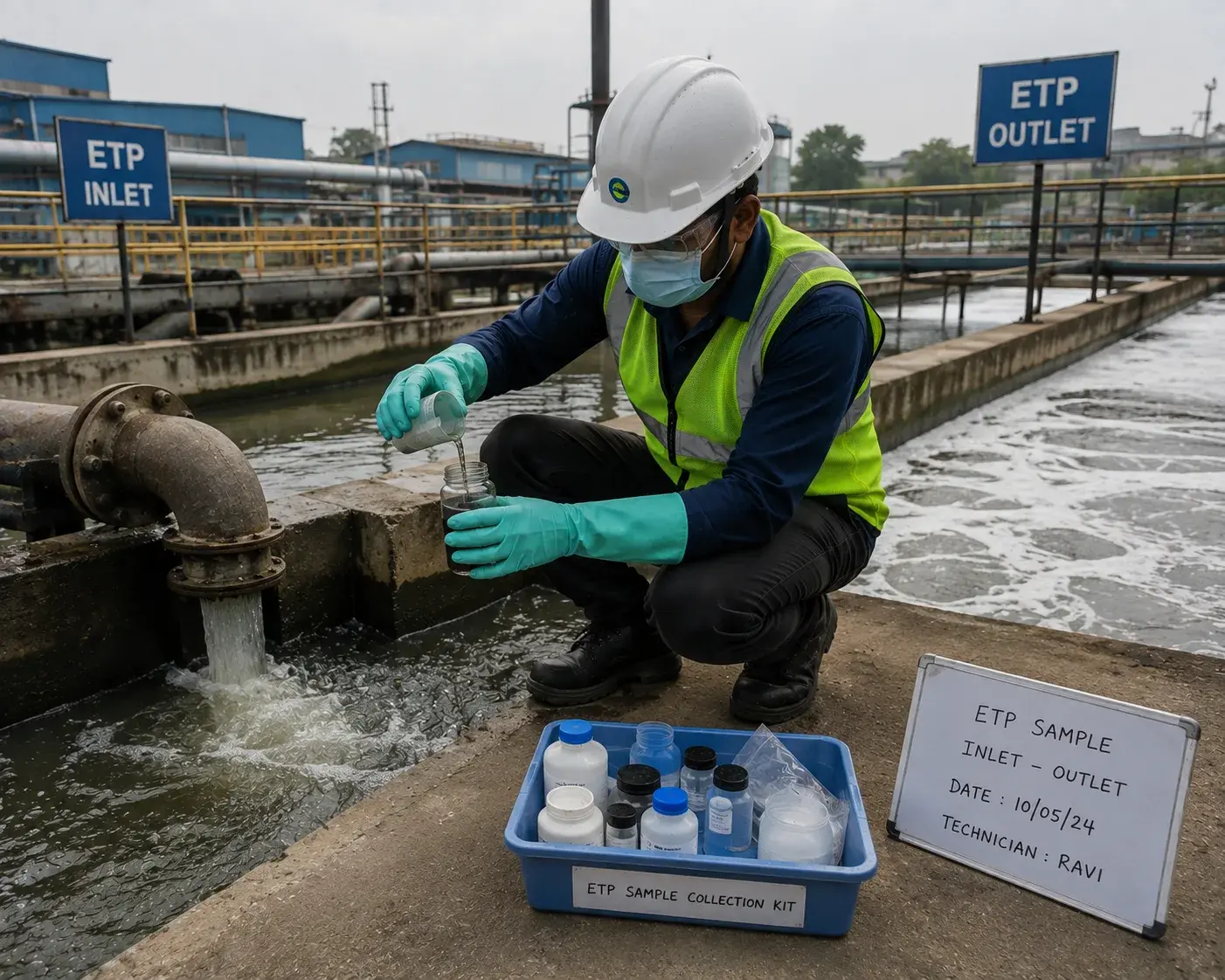
Overview
Wastewater/ETP Analysis is the systematic testing of industrial wastewater and treated effluent from Effluent Treatment Plants (ETPs) to evaluate treatment performance, identify pollutants and verify compliance with applicable discharge or reuse requirements. The analysis supports industries in monitoring ETP inlet, intermediate treatment stages and final treated effluent, optimizing treatment processes and maintaining environmental compliance.
Key Capabilities
- Physical parameters: Colour, odour, temperature, pH, TSS, TDS, turbidity and electrical conductivity
- Organic pollution: BOD, COD, TOC and other oxygen-demand parameters
- Chemical parameters: Chloride, sulphate, fluoride, nitrate, phosphate, ammonia, alkalinity and hardness
- Oil & grease / hydrocarbons: Oil & grease, petroleum hydrocarbons and other relevant organic contaminants
- Heavy metals: Iron, manganese, chromium, lead, cadmium, nickel, copper, zinc, mercury, arsenic and other applicable metals
- Industry-specific pollutants: Phenols, cyanide, sulphide, pesticides, solvents and other process-specific contaminants
- Microbiological testing: Applicable where treated effluent is intended for reuse
- Treatment-performance evaluation: Inlet–outlet comparison and pollutant removal efficiency
Applicable Regulatory Framework
- Environment (Protection) Act & Rules, 1986 – Environmental and effluent compliance.
- CPCB Standards/Guidelines – Industry-specific effluent requirements.
- SPCB/GPCB Requirements – Consent conditions and discharge limits.
- CTE/CTO Requirements – Applicable consent and operational conditions.
- Environmental Clearance (EC) – Project-specific conditions, where applicable.
- Treated Wastewater Reuse / ZLD Requirements – Based on project requirements.
- ISO/IEC 17025:2017 – Laboratory testing and reporting requirements.
Industries Served
PharmaChemicalsTextilesManufacturing