
Overview
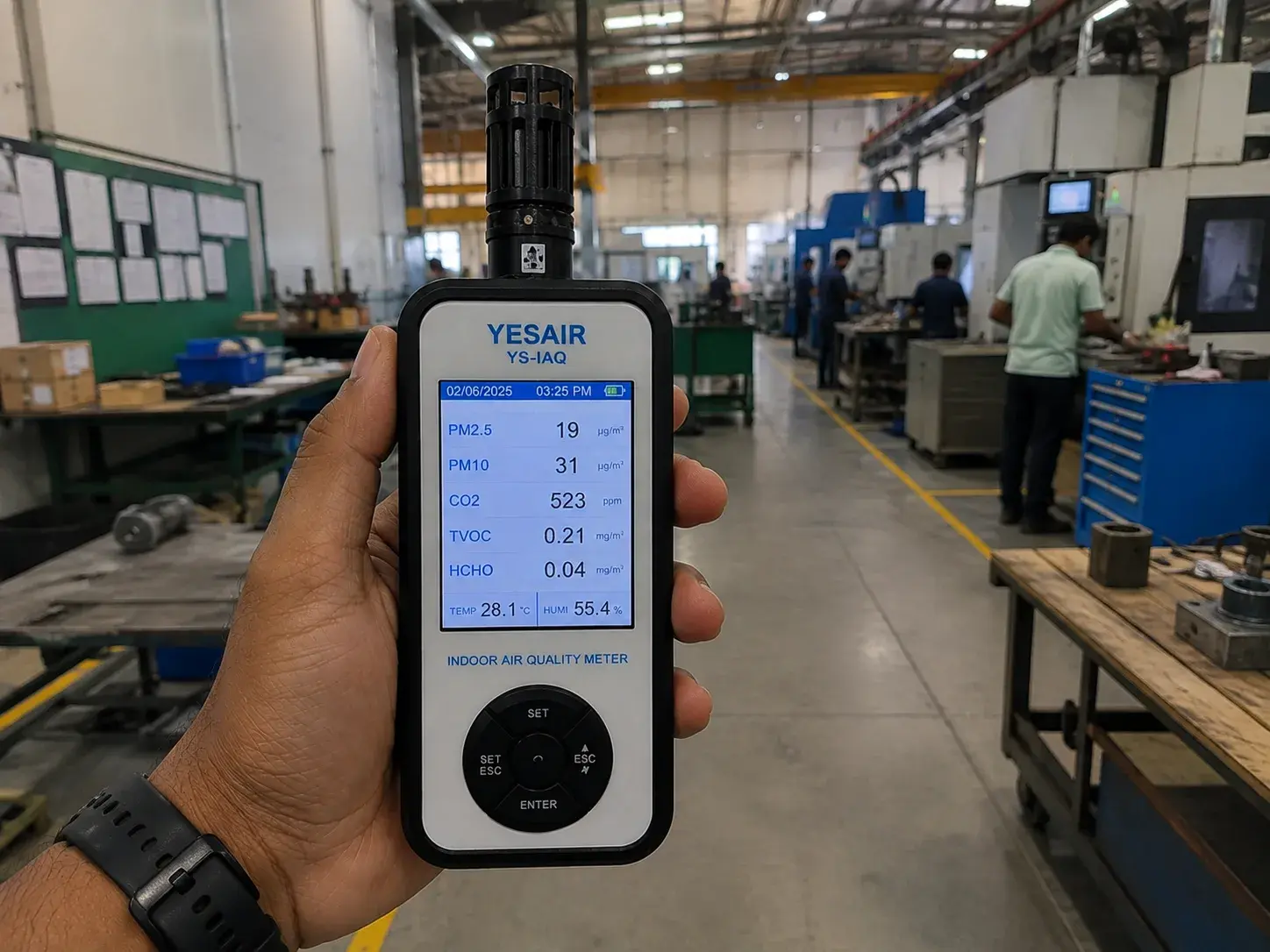
Indoor Air Quality (IAQ) Testing evaluates the quality of air inside offices, factories, laboratories, commercial buildings, hospitals, schools and other enclosed workplaces to identify pollutants and assess occupant comfort and health-related environmental conditions.
Key Capabilities
- Physical parameters: Temperature, relative humidity and ventilation indicators
- Particulate matter: PM₁₀, PM₂.₅ and other suspended particulates
- Gaseous pollutants: CO, CO₂, NO₂, SO₂, O₃ and other relevant gases
- VOCs: Total VOCs and selected individual VOCs, where required
- Formaldehyde: Monitoring where applicable
- Microbiological parameters: Airborne bacteria, fungi/yeast and mould, where required
- Ventilation assessment: Indoor air circulation and ventilation effectiveness
- Workplace assessment: Identification of potential indoor pollution sources
Applicable Regulatory Framework
- Factories Act, 1948 & applicable State Rules – Workplace environmental requirements.
- CPCB Guidelines – Applicable air-quality monitoring guidance.
- ASHRAE Standards – International reference for indoor air quality and ventilation.
- National Building Code (NBC) – Applicable building ventilation requirements.
- ISO/IEC 17025:2017 – Laboratory testing and reporting requirements.
Industries Served
Real EstateHospitalityCorporate OfficesHealthcare