
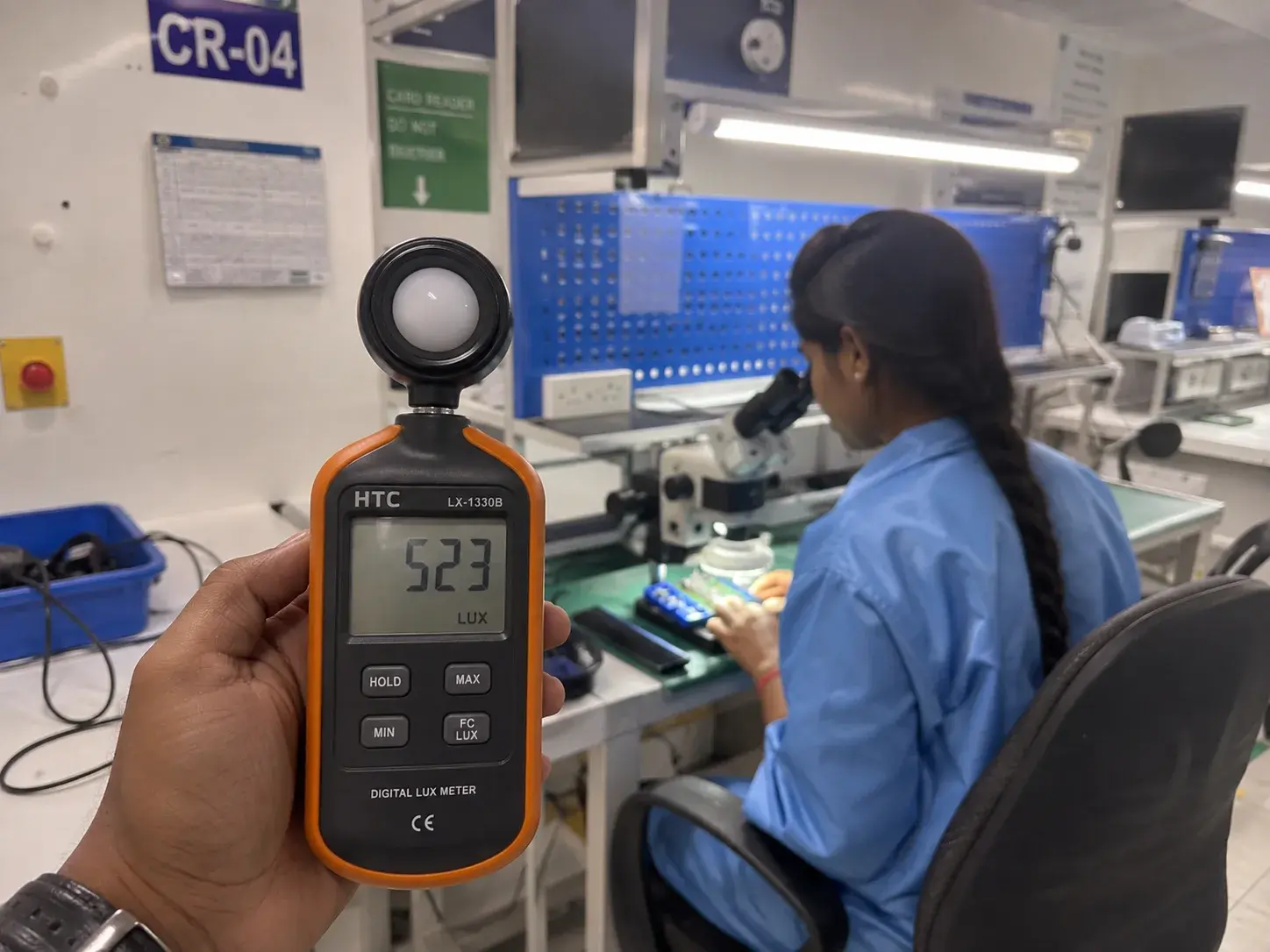
Overview
Illumination and VOC Testing evaluates workplace lighting conditions and volatile organic compound (VOC) concentrations to assess employee comfort, safety and potential occupational exposure.
Key Capabilities
- Illumination: Lux level measurement at workstations and activity areas
- VOC Monitoring: Total VOCs and selected individual VOCs
- Chemical exposure: Benzene, toluene, xylene, formaldehyde and other relevant VOCs
- Workplace assessment: Production areas, laboratories, offices, warehouses and enclosed spaces
- Compliance assessment: Comparison with applicable workplace standards and exposure limits
Applicable Regulatory Framework
- Factories Act, 1948 & applicable State Rules – Workplace health and safety.
- Occupational Safety, Health and Working Conditions Code, 2020 – Applicable occupational safety requirements.
- BIS Standards – Applicable illumination and workplace measurement standards.
- ACGIH/NIOSH Exposure Limits – Reference values for occupational VOC exposure, where applicable.
- CPCB Guidelines – Relevant environmental air-quality monitoring requirements.
- ISO/IEC 17025:2017 – Laboratory testing and reporting requirements.
- Hydrology, Geology & Mining.
Industries Served
ManufacturingCorporate OfficesWarehousingPharma